Introduction
In my experience in the bearing business, I often meet people who know that a bearing is used inside machines but are not sure what it actually does. A bearing is a small but extremely important machine component that helps rotating parts move smoothly while reducing friction.
Whether you are a factory owner, engineer, machine operator, maintenance professional, or procurement manager, understanding what a bearing is and how it works can help you make better decisions about machinery maintenance and bearing selection.
What Is a Bearing?
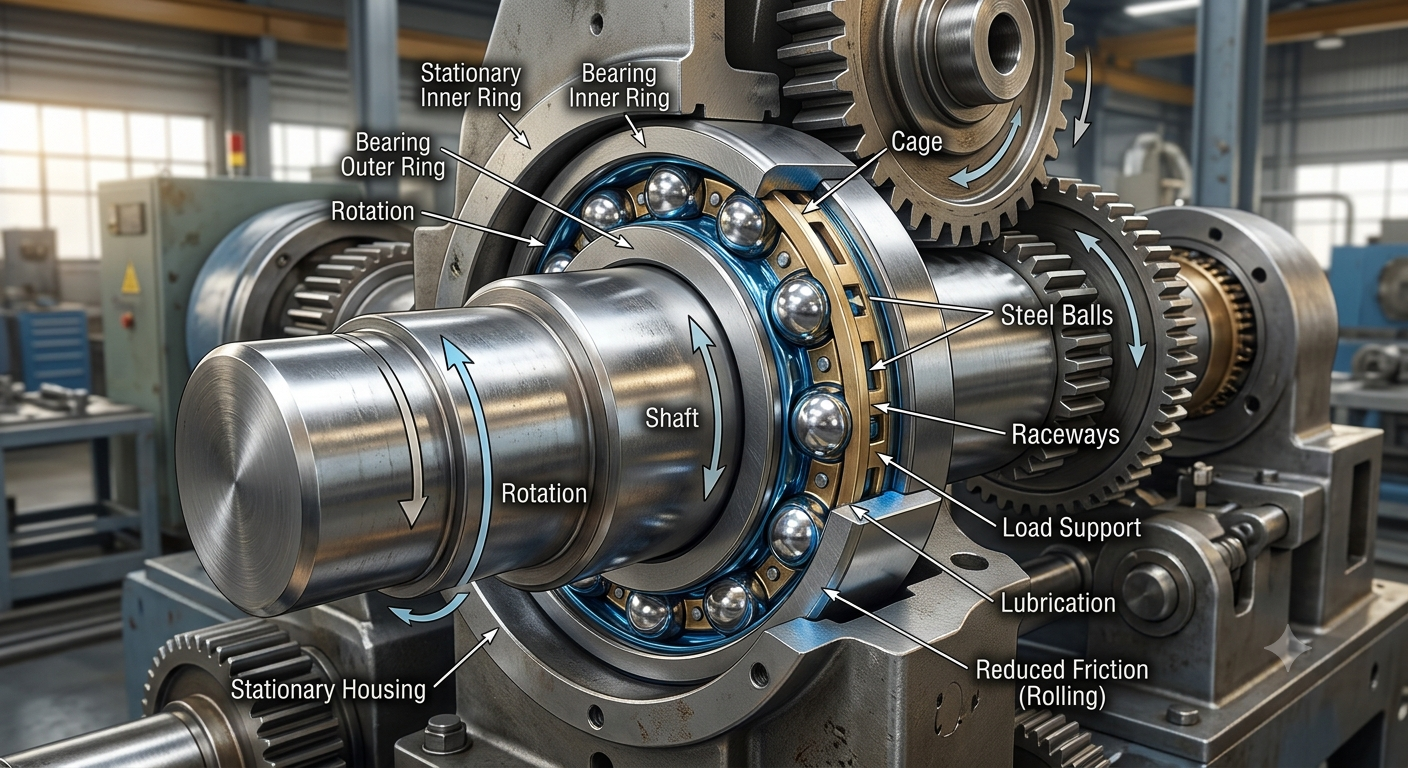
A bearing is a mechanical component designed to support rotating or moving parts while reducing friction between them. In simple terms, I like to describe a bearing as the component that helps a shaft rotate smoothly and efficiently.
Bearings are commonly used between a rotating shaft and a stationary component. By reducing friction and controlling movement, they help machinery operate with less energy loss, heat, vibration, and wear.
How Does a Bearing Work?
A bearing works by allowing controlled movement between two surfaces. Instead of allowing a shaft to rub directly against another surface, rolling elements such as balls or rollers move between specially designed rings.
This rolling motion significantly reduces friction compared with direct sliding contact. The result is smoother rotation, reduced wear, and improved operating efficiency.
Main Parts of a Bearing
Most rolling bearings consist of several important components:
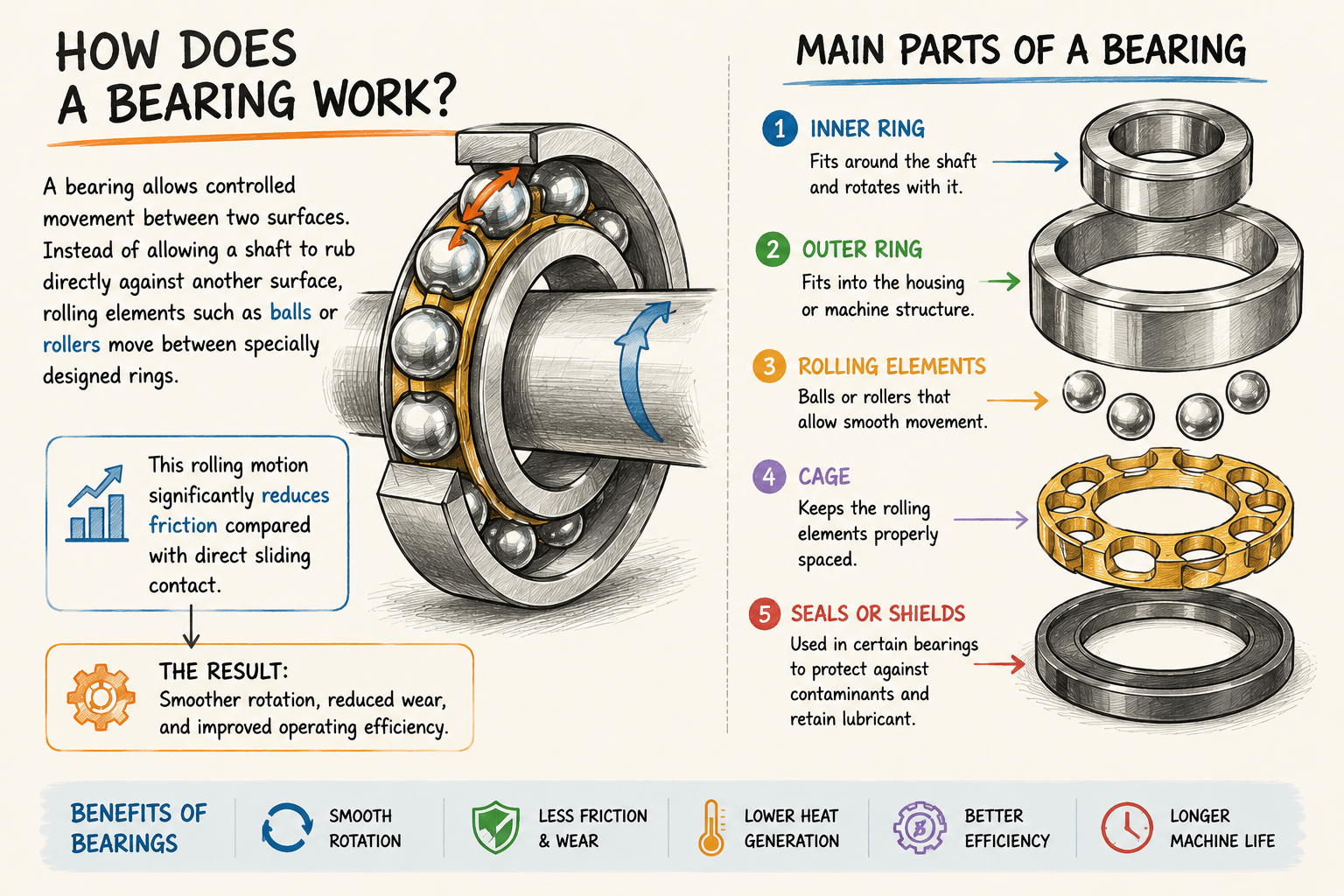
- Inner Ring: Fits around the shaft and rotates with it.
- Outer Ring: Fits into the housing or machine structure.
- Rolling Elements: Balls or rollers that allow smooth movement.
- Cage: Keeps the rolling elements properly spaced.
- Seals or Shields: Used in certain bearings to protect against contaminants and retain lubricant.
The exact construction depends on the bearing type and its intended application.
Types of Bearings
I work with different bearing requirements, and one thing I always emphasize is that there is no single bearing suitable for every machine.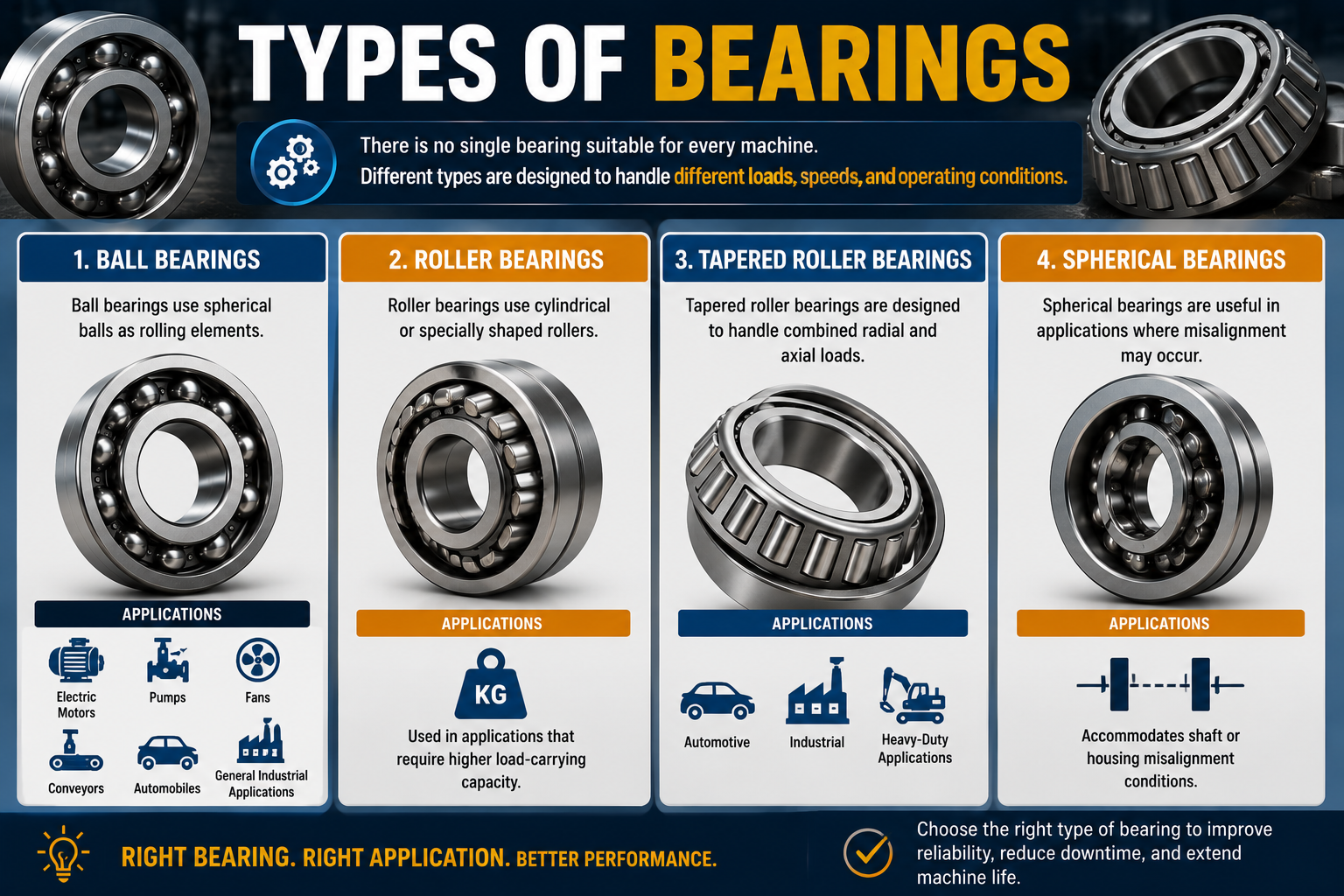
Ball Bearings
Ball bearings use spherical balls as rolling elements. They are widely used in electric motors, pumps, fans, conveyors, automobiles, and many general industrial applications.
Roller Bearings
Roller bearings use cylindrical or specially shaped rollers. They are generally selected when an application requires higher load-carrying capacity.
Tapered Roller Bearings
Tapered roller bearings are designed to handle combined radial and axial loads. I commonly see them used in automotive, industrial, and heavy-duty applications.
Spherical Bearings
Spherical bearings are useful in applications where misalignment may occur. Their design allows them to accommodate certain shaft or housing alignment conditions.
Where Are Bearings Used?
Bearings are present in almost every industry where machinery involves rotation or movement.
I see bearings being used in electric motors, pumps, gearboxes, conveyors, agricultural machinery, automobiles, construction equipment, manufacturing machines, fans, compressors, and industrial production equipment.
Without suitable bearings, many machines would experience significantly higher friction, heat, vibration, and component wear.
Why Are Bearings Important?
From my experience, the importance of bearings becomes most obvious when one fails. A damaged or incorrectly selected bearing can cause unusual noise, vibration, overheating, reduced efficiency, and unexpected machine downtime.
For factories, this can go beyond the cost of replacing the bearing. Production interruptions, labour costs, damaged components, and maintenance time can make a bearing failure considerably more expensive.
How Do I Choose the Right Bearing?
When I help customers select bearings, I don’t look at dimensions alone. I consider the load, operating speed, temperature, environment, lubrication, shaft size, available space, and type of machine.
Choosing the correct bearing for the application can improve reliability, extend service life, reduce maintenance requirements, and help prevent premature failure.
Conclusion
A bearing may look like a simple mechanical component, but its role in modern machinery is extremely important. By supporting movement and reducing friction, bearings help machines operate smoothly, efficiently, and reliably.
If you understand how bearings work and what factors affect their selection, you can make better purchasing and maintenance decisions.
Now that you know what a bearing does, can you identify which type of bearing your machinery actually needs?