Things You Should Know Before Buying Bearings
Introduction
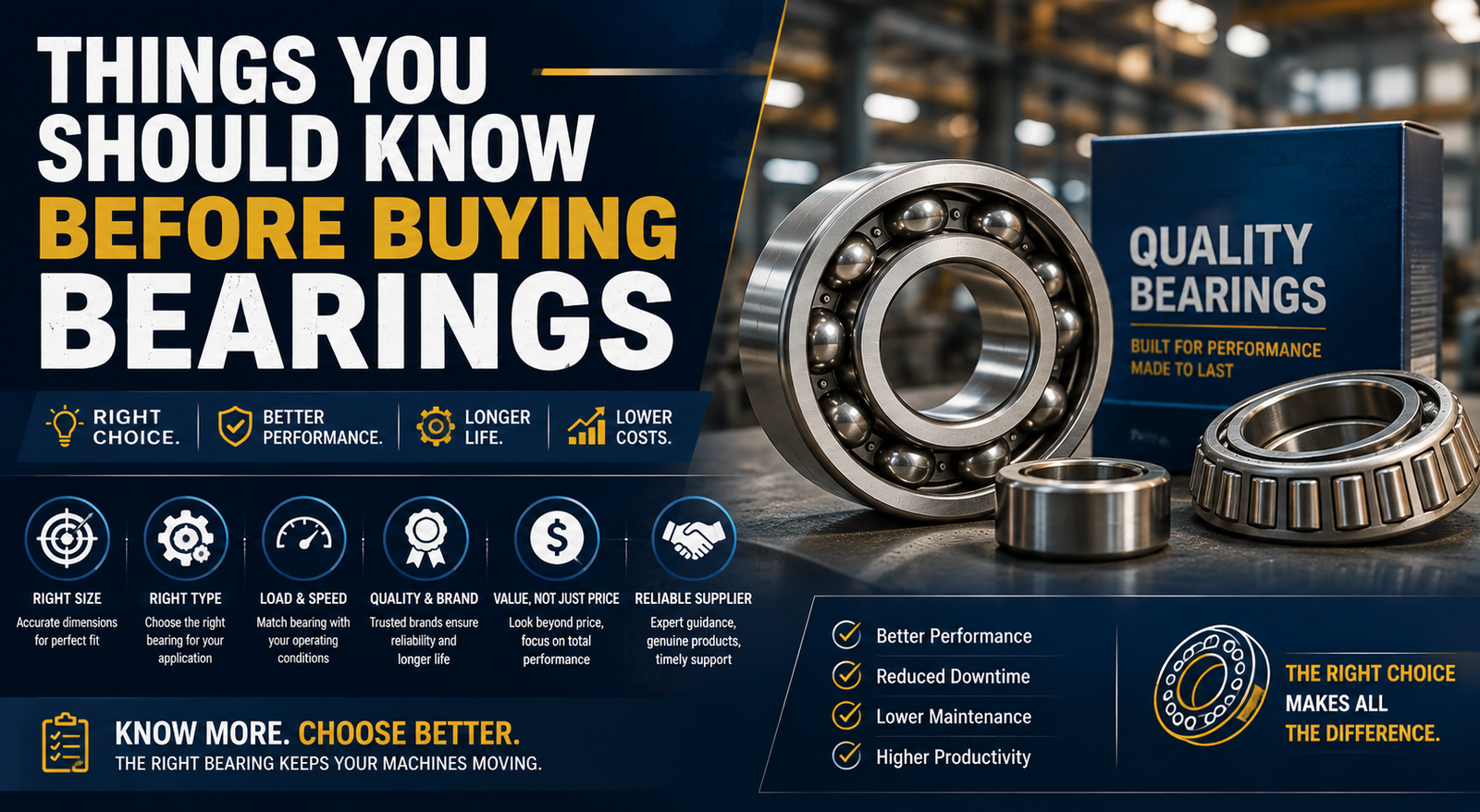
In my experience in the bearing business, I have seen customers focus heavily on price and availability while overlooking factors that directly affect bearing performance. Choosing the right bearing is not simply about finding one that fits your machine.
Whether you are a factory owner, engineer, maintenance professional, machine operator, or procurement manager, understanding a few important factors before buying can help you avoid premature failures and unnecessary expenses.
1. Know the Exact Bearing Size
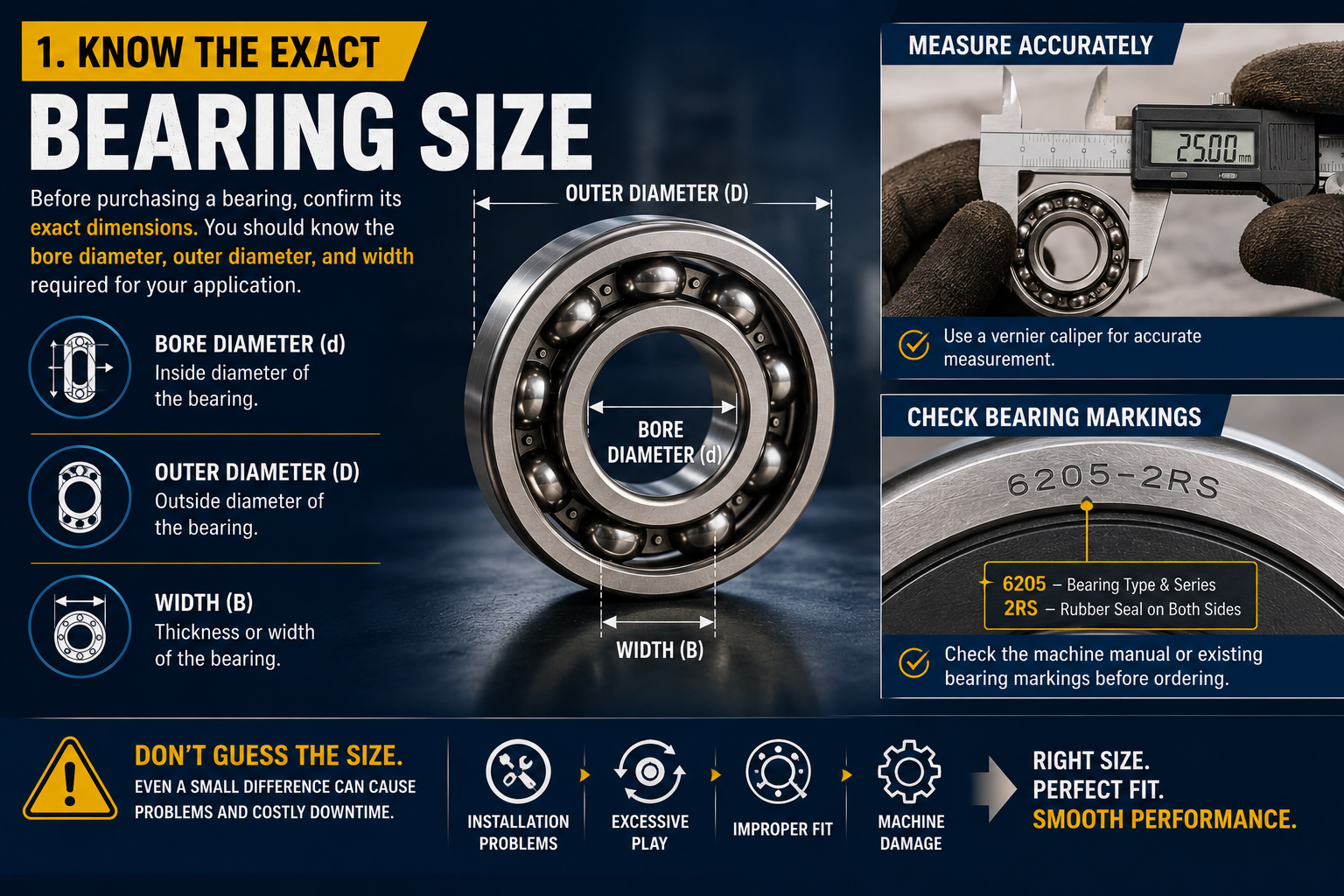
Before purchasing a bearing, I always recommend confirming its exact dimensions. You should know the bore diameter, outer diameter, and width required for your application.
Even a small dimensional difference can create installation problems, excessive play, improper fit, or machine damage. If possible, check the machine manual or existing bearing markings before placing an order.
2. Understand Your Application
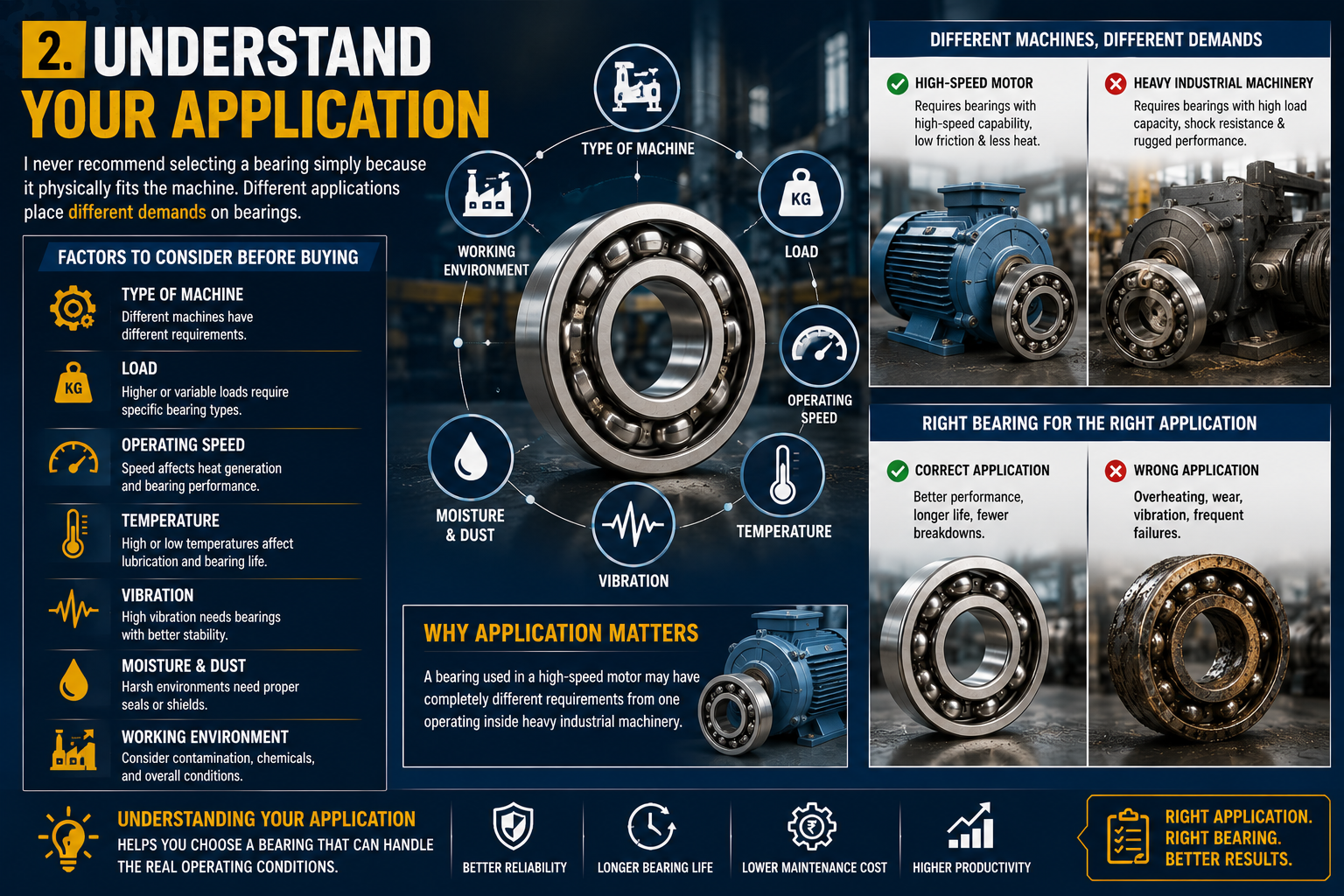
I never recommend selecting a bearing simply because it physically fits the machine. Different applications place different demands on bearings.
Before buying, I consider factors such as the type of machine, load, operating speed, temperature, vibration, moisture, dust, and working environment. These conditions help determine which bearing is actually suitable.
Why Application Matters
A bearing used in a high-speed motor may have completely different requirements from one operating inside heavy industrial machinery.
Understanding the application helps you select a bearing that can handle the actual operating conditions instead of simply matching the dimensions.
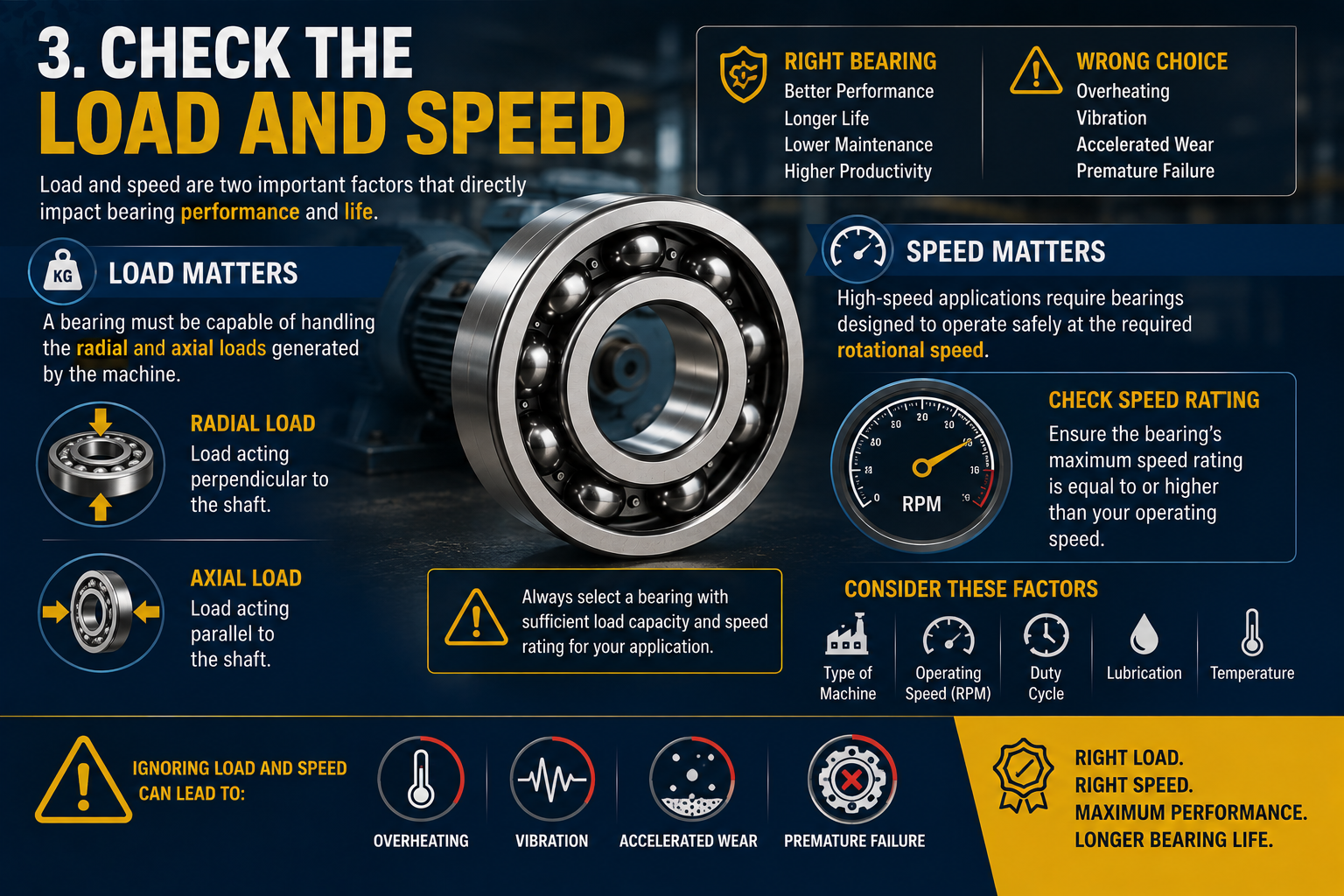
3. Check the Load and Speed
Load and speed are two important factors that I always discuss with customers.
A bearing must be capable of handling the radial and, where applicable, axial loads generated by the machine. Similarly, high-speed applications require bearings designed to operate safely at the required rotational speed.
Ignoring these factors can lead to overheating, vibration, accelerated wear, and premature failure.
4. Choose the Right Bearing Type
Not every bearing is designed for the same purpose. Ball bearings, roller bearings, tapered roller bearings, spherical bearings, and other types have different characteristics.
I recommend understanding what type of load and movement your machine requires before making a purchase. Selecting the correct bearing type can significantly influence performance and service life.
5. Don’t Choose Only on Price
Price is certainly important when purchasing bearings, but I believe it should never be the only consideration.
A cheaper bearing may appear economical initially, but frequent replacement, machine downtime, labour costs, and production losses can make it much more expensive in the long run.
I always suggest comparing quality, application suitability, reliability, and total operating cost rather than looking only at the purchase price.
6. Consider the Bearing Brand and Quality
The brand and quality of a bearing can make a considerable difference, particularly in demanding industrial applications.
Before buying, I recommend checking the manufacturer’s reputation, product specifications, quality standards, and authenticity. For critical machinery, using a reliable and genuine product is especially important.
7. Check Seals, Shields, and Clearance
Details such as seals, shields, and internal clearance are easy to overlook, but they can be extremely important.
Depending on your application, you may need protection against dust, moisture, contaminants, or high temperatures. The correct clearance is also important for accommodating operating conditions such as temperature and shaft expansion.
8. Buy From a Reliable Supplier
I believe the supplier is almost as important as the bearing itself.
A reliable supplier should be able to provide accurate specifications, genuine products, technical guidance, and consistent availability. They should also understand your application rather than simply selling whatever bearing is currently available.
Ask Questions Before Ordering
When I deal with customers, I prefer understanding their requirement before suggesting a bearing. Don’t hesitate to ask about specifications, compatibility, brand, warranty, availability, and expected service life.
The more information you provide, the easier it becomes to identify the right product.
9. Think About Availability and Future Replacement
For factories and production facilities, I recommend considering future availability before standardizing a bearing.
If a particular bearing is difficult to source, an unexpected failure could keep your machine idle while you wait for replacement. Maintaining a reliable supply chain can therefore be just as important as selecting the right bearing.
Conclusion
From my experience, buying the right bearing starts well before placing the order. Size, application, load, speed, bearing type, quality, seals, clearance, price, and supplier reliability all deserve consideration.
The right bearing can improve machine reliability, reduce downtime, control maintenance costs, and ultimately protect your production.
So, before you buy your next bearing, are you choosing it because it is genuinely right for your machine—or simply because it fits and costs less?