Introduction
In my experience in the bearing business, I have learned that choosing the right bearing is just as important as choosing the right machine component. Different bearings are designed for different loads, speeds, temperatures, alignment conditions, and applications.
Whether you are a factory owner, engineer, maintenance professional, machine operator, or procurement manager, understanding the types of bearings can help you make better purchasing and maintenance decisions.
What Are the Different Types of Bearings?

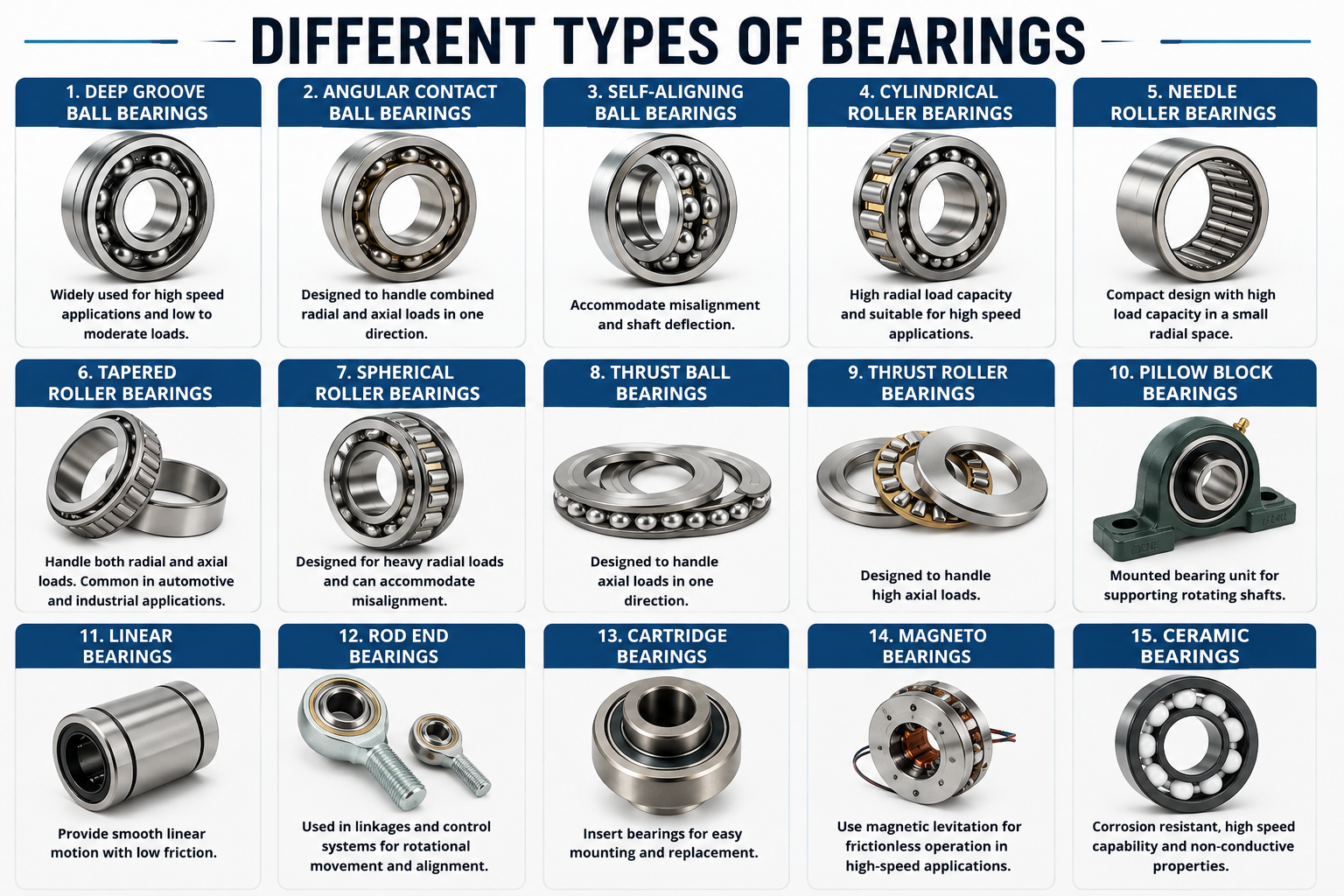
There is no single bearing that works perfectly for every application. I regularly come across requirements where two bearings may look similar but perform very differently because their internal design and load-handling capabilities are different.
The most commonly used industrial bearing types include ball bearings, cylindrical roller bearings, tapered roller bearings, spherical roller bearings, needle roller bearings, angular contact bearings, and thrust bearings.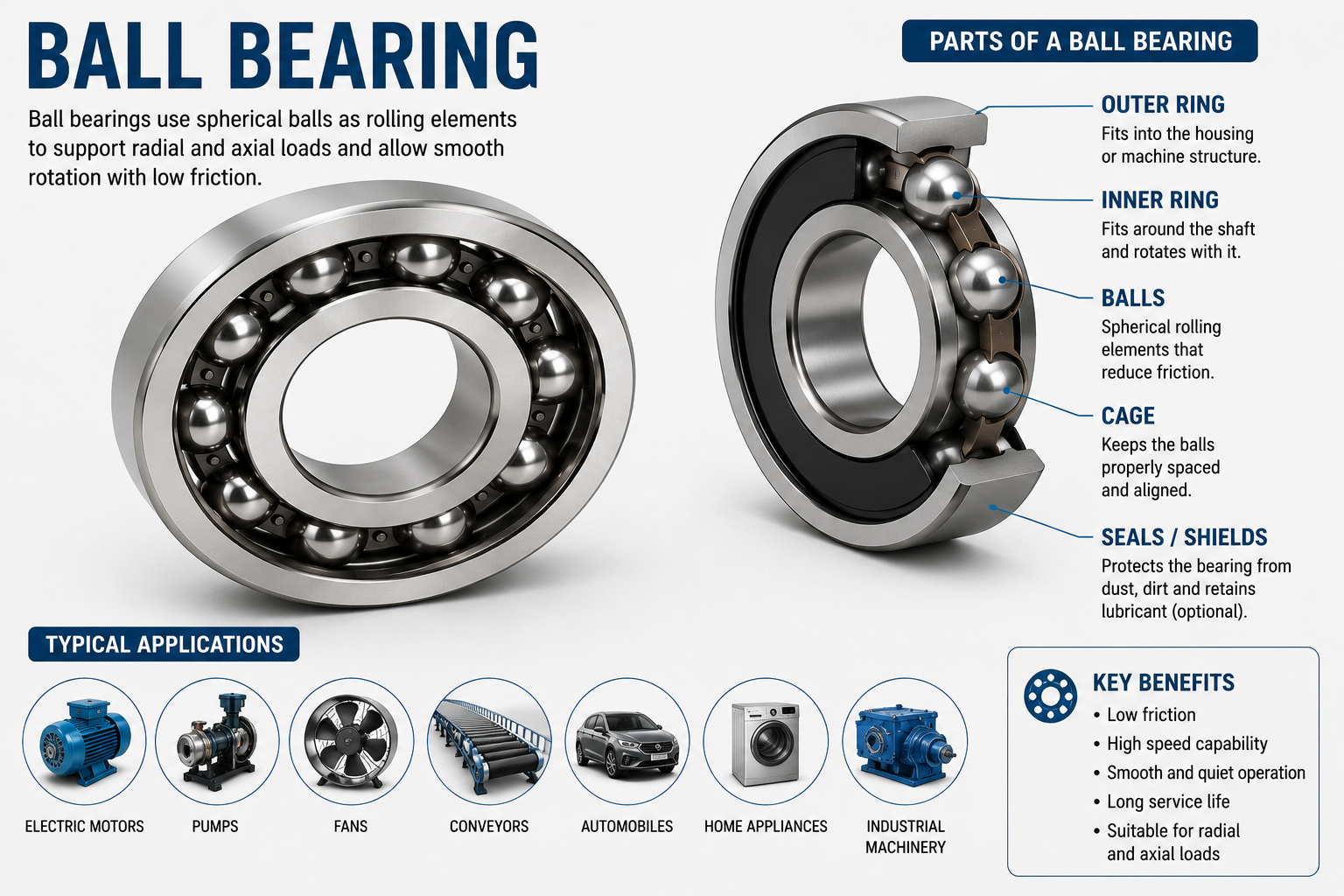
1. Ball Bearings
Ball bearings use spherical balls as rolling elements between the inner and outer rings. I commonly see them used where smooth rotation, relatively low friction, and moderate load capacity are required.
They are widely used in electric motors, pumps, fans, conveyors, automobiles, household equipment, and general industrial machinery.
Common Ball Bearing Applications
Deep groove ball bearings are particularly common because of their versatility. Depending on the design, ball bearings can handle radial loads and, in certain applications, axial loads as well.
2. Cylindrical Roller Bearings
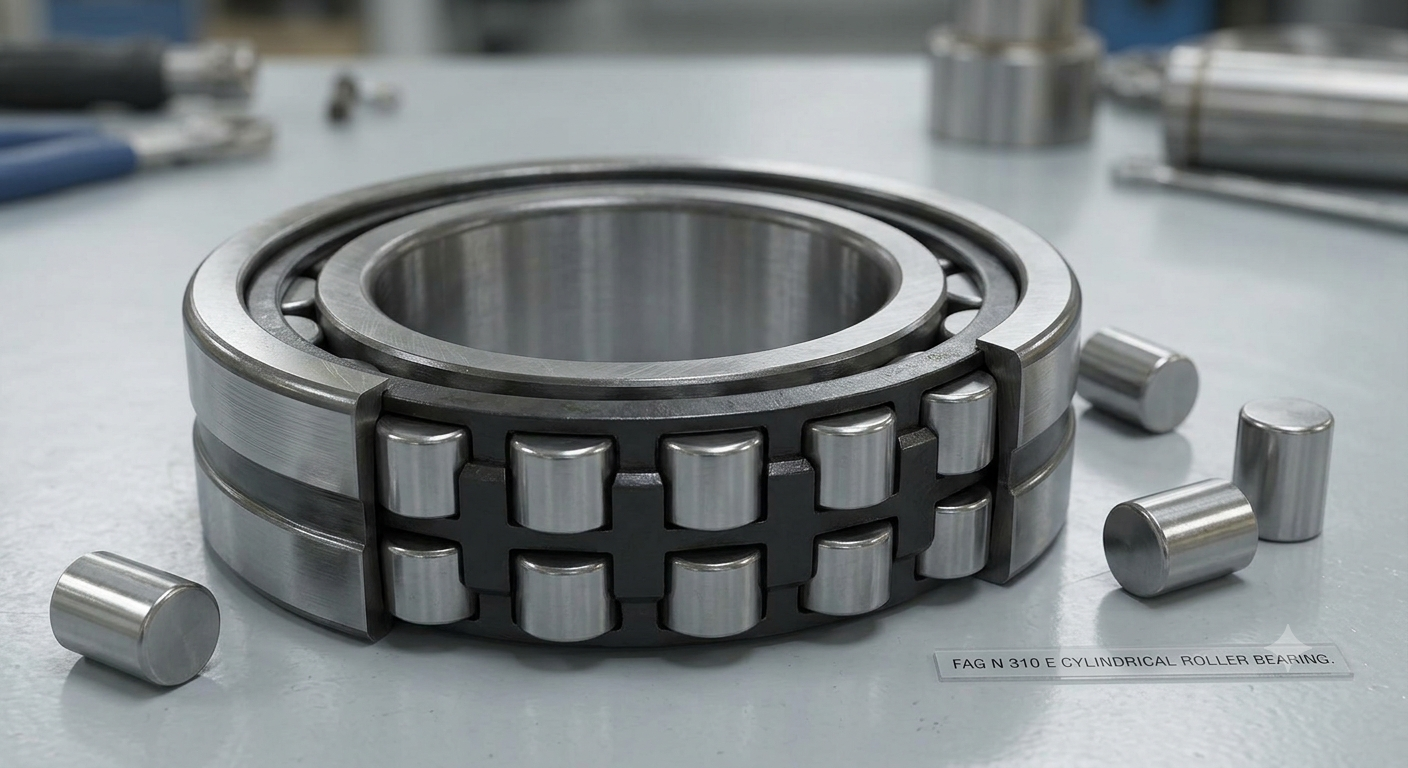
Cylindrical roller bearings use cylindrical rollers instead of balls. Their larger contact area allows them to handle higher radial loads compared with many standard ball bearings.
I often see these bearings in gearboxes, electric motors, industrial machinery, pumps, and heavy-duty equipment where higher radial load capacity is required.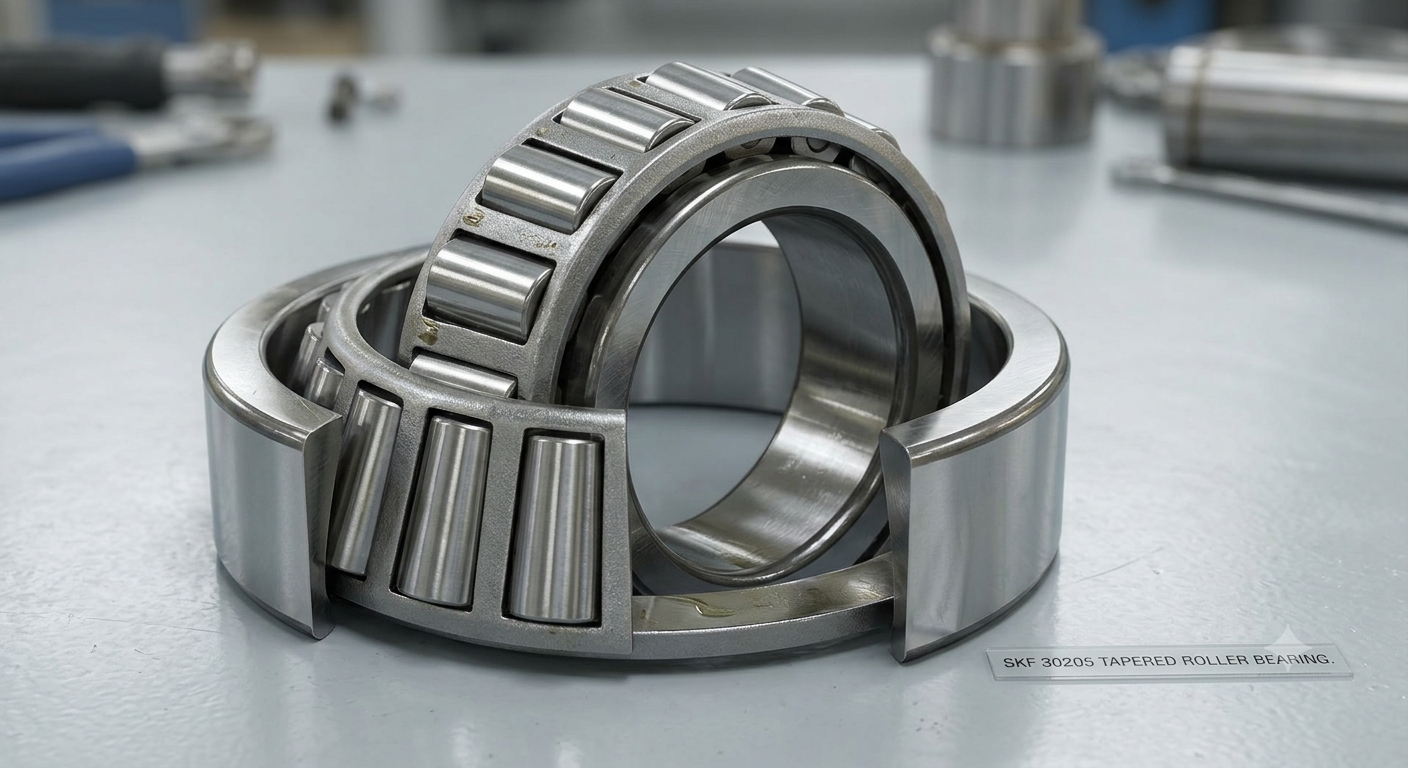
3. Tapered Roller Bearings
Tapered roller bearings have tapered rollers and raceways designed to handle combined radial and axial loads.
I commonly encounter them in automotive applications, gearboxes, industrial machinery, wheel assemblies, and heavy-duty equipment. Their design makes them particularly useful when both types of loads are present.
4. Spherical Roller Bearings
Spherical roller bearings are designed for applications involving heavy radial loads and potential shaft or housing misalignment.
I recommend considering them when machinery operates under demanding conditions where alignment can change during operation. They are commonly used in conveyors, crushers, industrial gearboxes, mining equipment, and heavy machinery.
5. Needle Roller Bearings
Needle roller bearings use long, thin cylindrical rollers. Their compact design provides relatively high load capacity while requiring less radial space.
I find them useful in applications where installation space is limited, including automotive components, transmissions, pumps, compressors, and industrial machinery.
6. Angular Contact Ball Bearings
Angular contact ball bearings are designed to handle radial loads along with axial loads in a specific direction.
They are commonly used in machine tools, pumps, compressors, electric motors, and high-speed applications. When selecting these bearings, I pay particular attention to load direction, speed, and operating conditions.
7. Thrust Bearings
Thrust bearings are primarily designed to handle axial loads, which act parallel to the shaft.
Depending on the design, thrust bearings can use balls or rollers. I see them used in applications where controlling axial movement is important, including automotive systems, industrial machinery, gearboxes, and rotating equipment.
How Do I Choose the Right Bearing Type?
When I help a customer select a bearing, I don’t recommend choosing it simply because it fits the shaft. I first look at the load, speed, temperature, lubrication, alignment, operating environment, available space, and machine design.
The right bearing type can improve machine reliability, reduce unexpected downtime, and extend service life. The wrong choice can lead to overheating, vibration, excessive wear, and premature bearing failure.
Conclusion
From my experience, understanding the different types of bearings is the first step toward making a better bearing selection. Ball, roller, tapered, spherical, needle, angular contact, and thrust bearings each have their own advantages and applications.
For any industrial application, I recommend evaluating the machine’s actual operating conditions before purchasing a bearing rather than selecting one based only on size or price.
Which type of bearing does your machine use, and are you confident that it is the right one for your application?