
Introduction
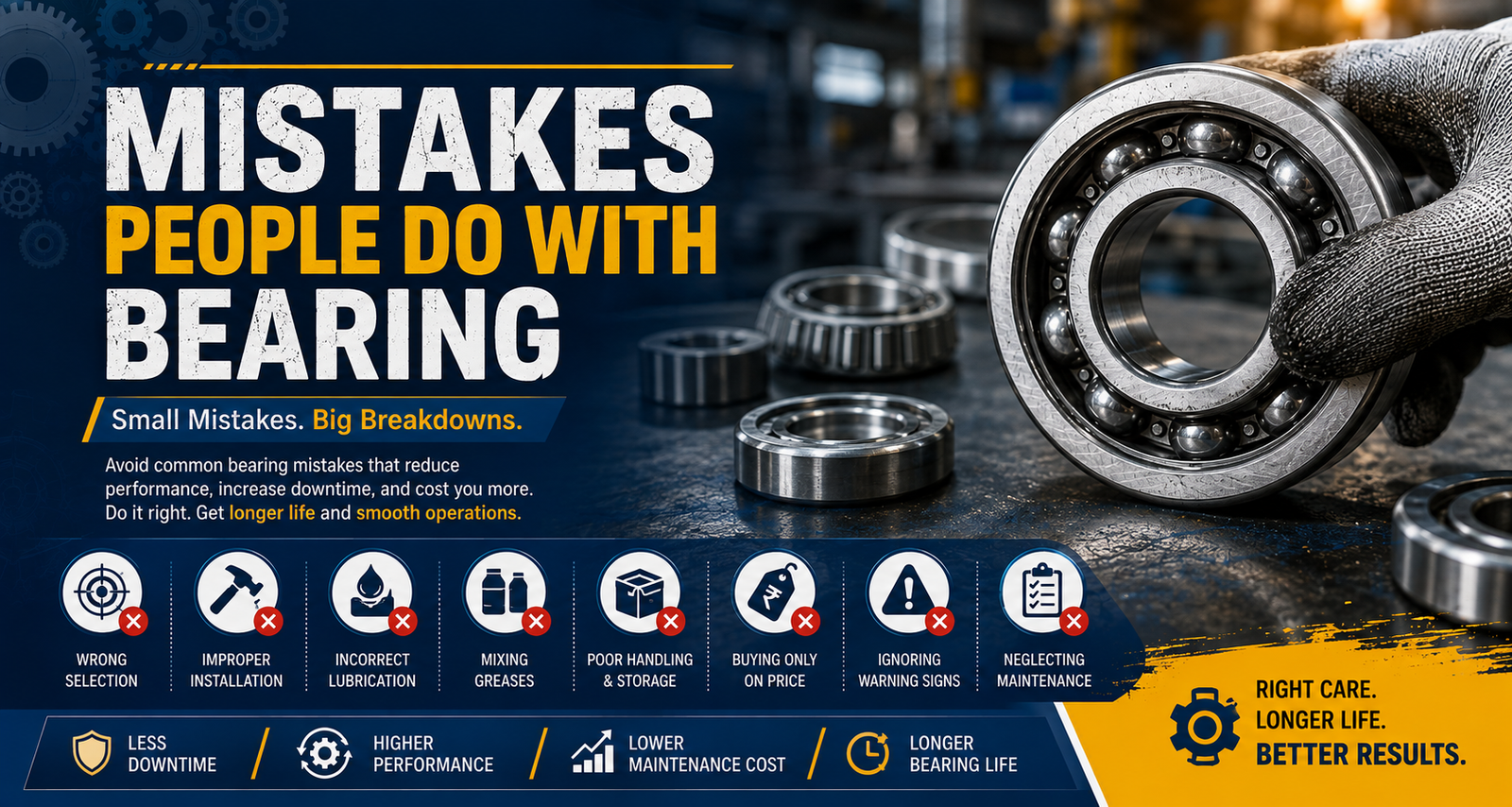
In my experience working around the bearing industry, I have seen many bearing failures that could have been easily prevented. The problem is often not the bearing itself, but incorrect selection, installation, lubrication, handling, or maintenance.
For factory owners, engineers, maintenance teams, and machine operators, understanding these mistakes can reduce unexpected breakdowns, production losses, and unnecessary replacement costs.
1. Choosing the Wrong Bearing
One of the most common mistakes I see is selecting a bearing based only on its size or price. A bearing may physically fit a machine but still be unsuitable for its operating conditions.
I always recommend considering load, speed, temperature, operating environment, shaft dimensions, and expected service life before selecting a bearing.
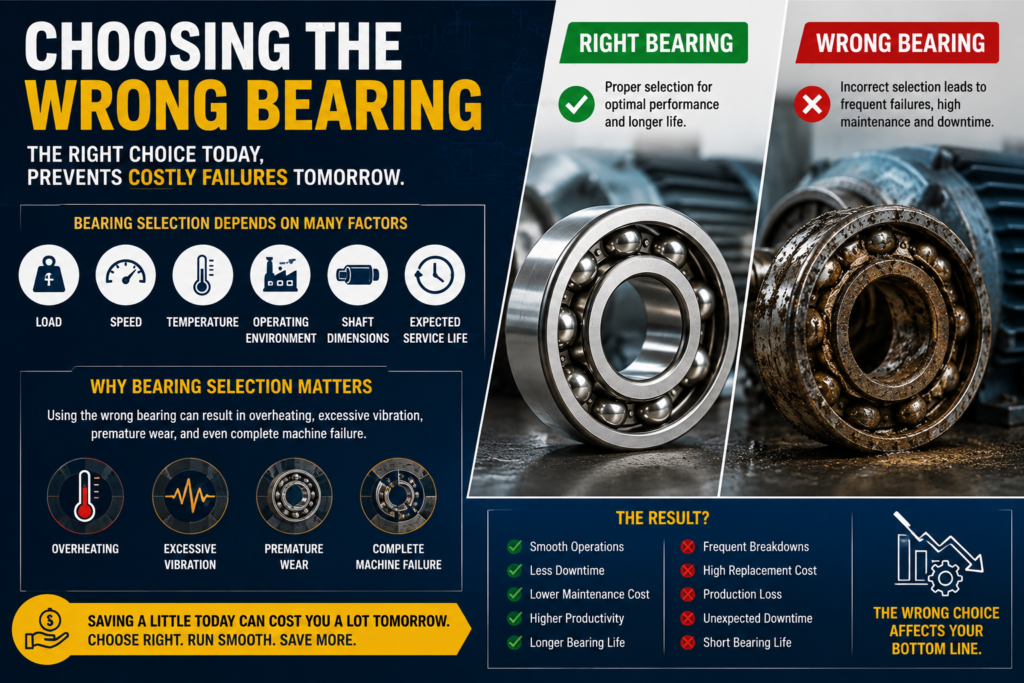
Why Bearing Selection Matters
Using the wrong bearing can result in overheating, excessive vibration, premature wear, and even complete machine failure. Saving a little money on the initial purchase can become expensive when it leads to repeated breakdowns.
2. Ignoring Proper Bearing Installation
I have seen bearings damaged simply because they were installed using improper tools or excessive force. Hitting a bearing directly with a hammer can damage its races, rolling elements, or seals.
The correct installation method depends on the bearing and application. Using appropriate tools and applying force to the correct ring is essential for preventing unnecessary damage.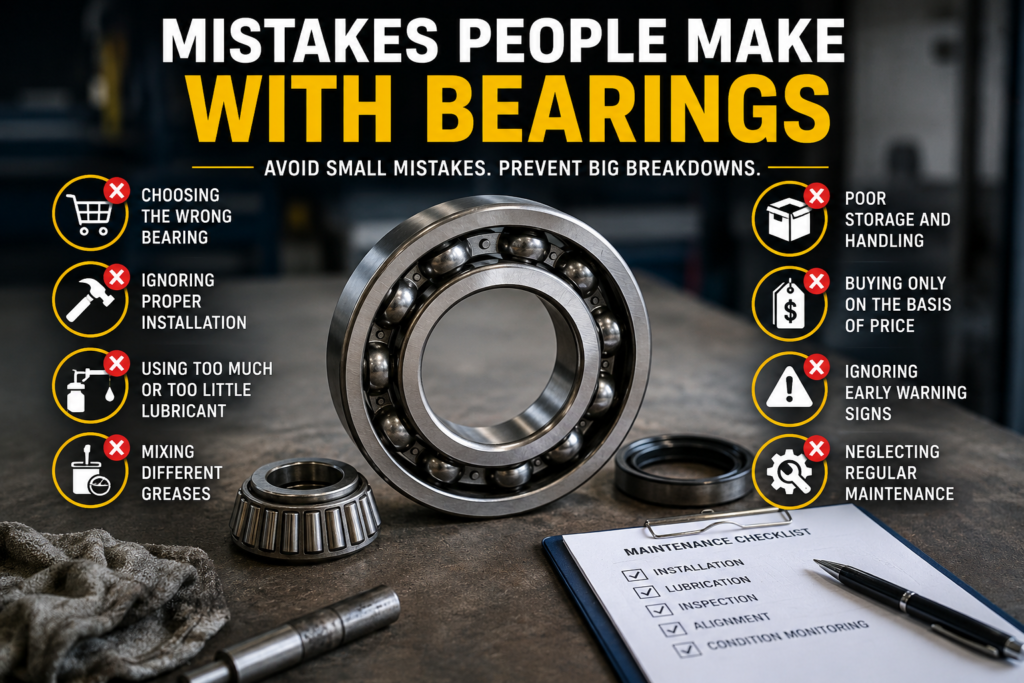
3. Using Too Much or Too Little Lubricant
Lubrication is critical for bearing performance, but more lubricant does not always mean better protection.
When I advise customers on bearing maintenance, I emphasize using the correct lubricant and quantity recommended for the application. Excess grease can generate heat, while insufficient lubrication can increase friction and accelerate wear.
Use the Right Lubricant
Different applications require different lubrication solutions. High-speed machinery, high-temperature equipment, and heavily loaded machines may require specialized lubricants.
4. Mixing Different Greases
Another mistake that can easily be overlooked is mixing incompatible greases. Different grease types may contain different base oils, thickeners, and additives.
Before changing the lubricant, I recommend checking compatibility or completely removing the previous grease when necessary. This simple step can prevent lubrication-related bearing failures.
5. Poor Bearing Storage and Handling
A bearing can be damaged before it even reaches the machine.
I always stress the importance of storing bearings in a clean, dry environment and keeping them in their original packaging until required. Dropping bearings, exposing them to moisture, or handling them with dirty hands can compromise their performance.
6. Buying Only on the Basis of Price
Price is important, but I believe it should never be the only deciding factor when purchasing bearings.
A low-cost bearing that fails repeatedly can cost much more through machine downtime, labour, production losses, and emergency replacements. I recommend evaluating quality, application suitability, reliability, and supplier credibility along with price.
7. Ignoring Early Warning Signs
Bearings rarely fail without giving some indication. Unusual noise, vibration, increased temperature, or abnormal movement can indicate a developing problem.
I encourage maintenance teams to investigate these warning signs instead of waiting for complete failure. Early inspection can often prevent a small bearing issue from becoming a major machine breakdown.
8. Neglecting Regular Maintenance
Even a high-quality bearing requires proper maintenance. Dust, contamination, misalignment, improper lubrication, and excessive loads can significantly reduce bearing life.
A planned inspection and maintenance schedule helps identify problems early and keeps machinery operating more reliably.
Conclusion
From what I have observed in the bearing industry, many premature bearing failures are caused by simple mistakes rather than manufacturing defects. Correct selection, installation, lubrication, storage, handling, and maintenance can make a significant difference.
If you work with industrial machinery, which of these bearing mistakes have you encountered most often in your factory or workplace